
Heavy-Duty Floating Shelves
A floating shelf's load capacity comes from what is inside the wall, not the shelf itself. We build ours from full 2-inch solid stock over a steel spine, and the spine is anchored into stud locations or blocking confirmed during field verification. What the shelf can hold, books, ceramics, or heavier items, is a function of that anchoring and the shelf's span, and we size the hardware to the intended use before fabrication.
Get a custom quote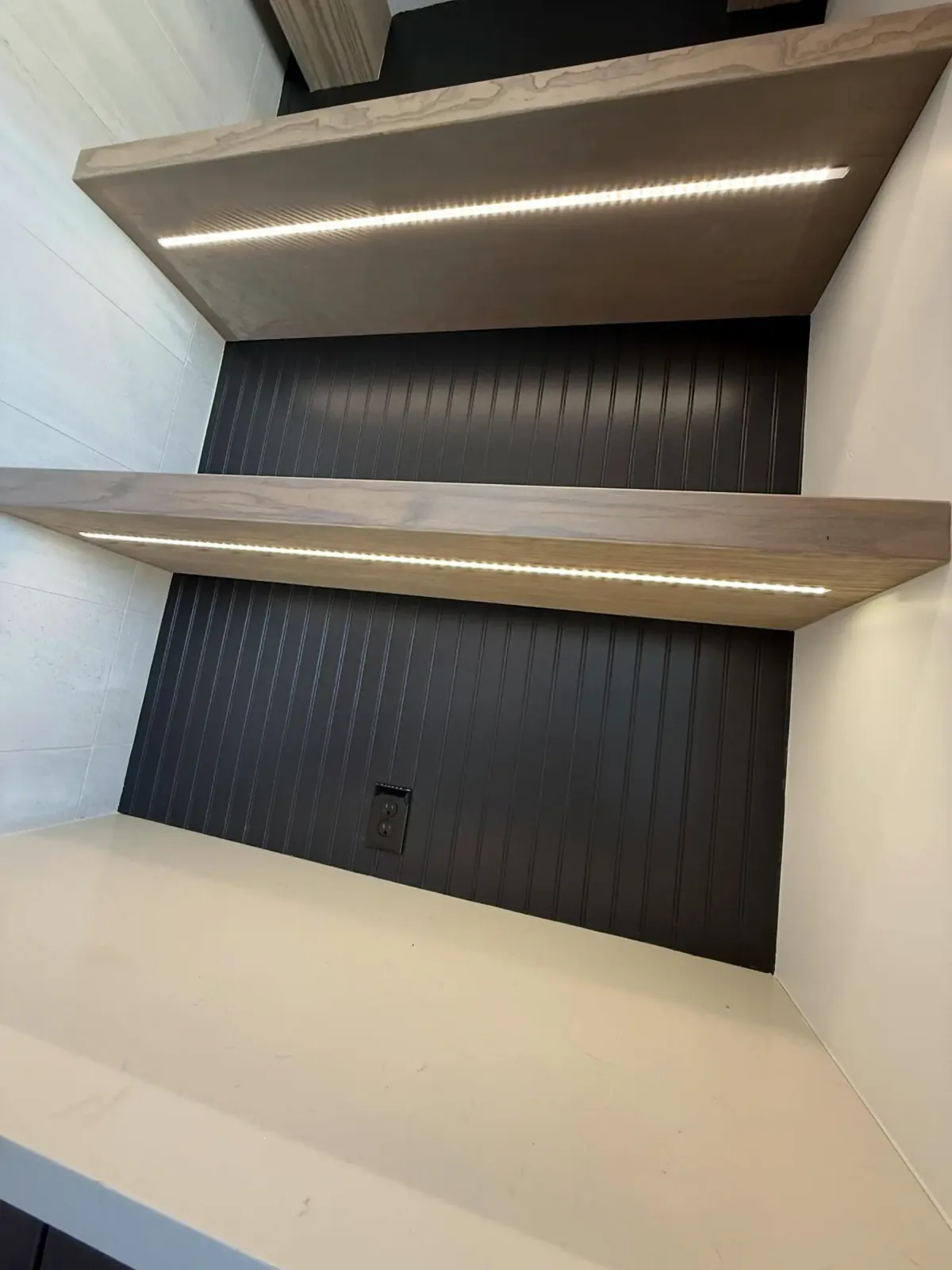
What's included
- Field verification of stud locations behind the install wall
- Steel spine sized to the shelf length and intended load
- Shop fabrication from full 2-inch stock
- Grain matching across a run of multiple shelves
- In-place stain and topcoat to an approved sample
Common wood species
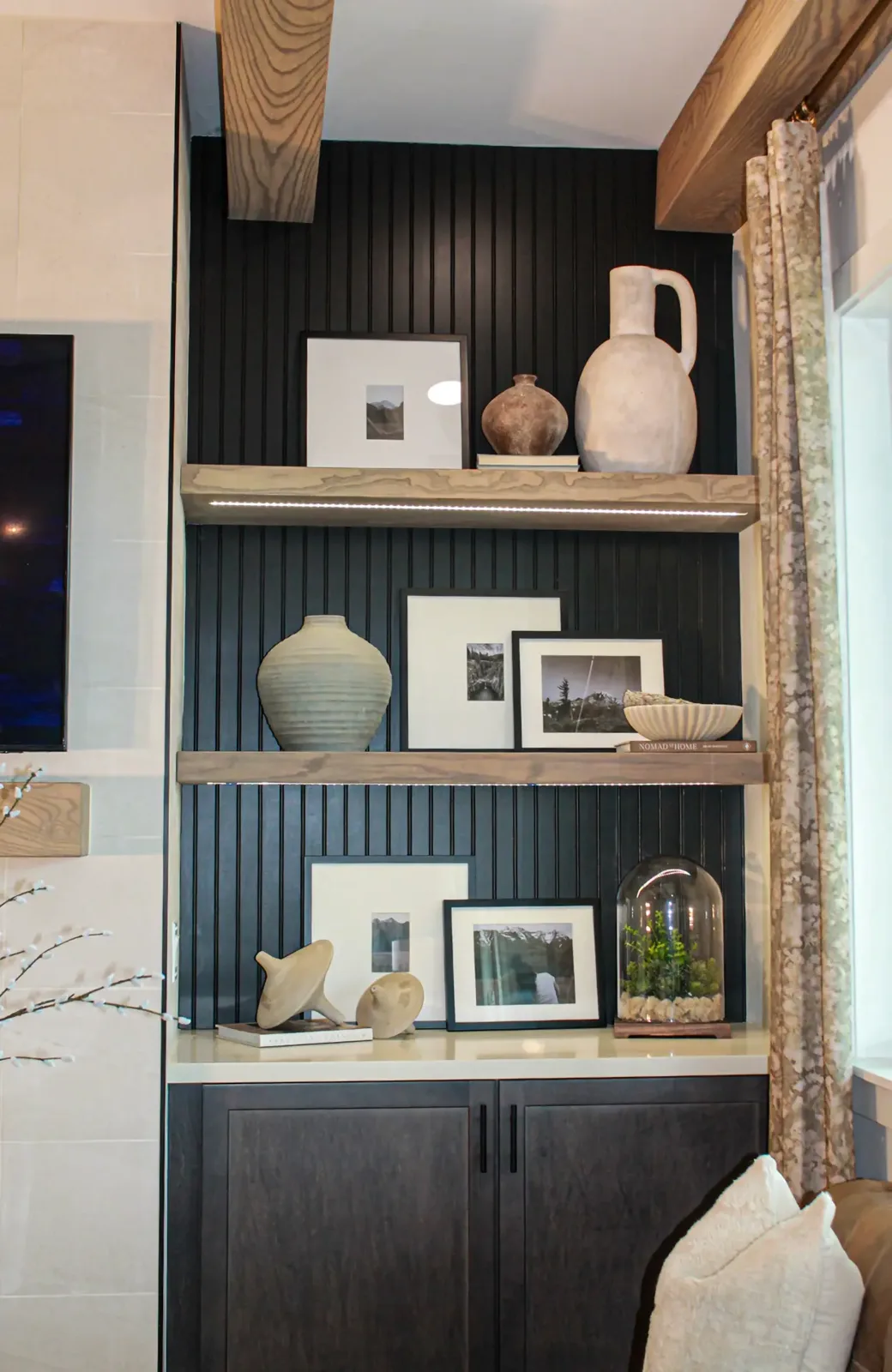
Heavy-Duty Floating Shelves we've built
Shop finishes
See all finishes →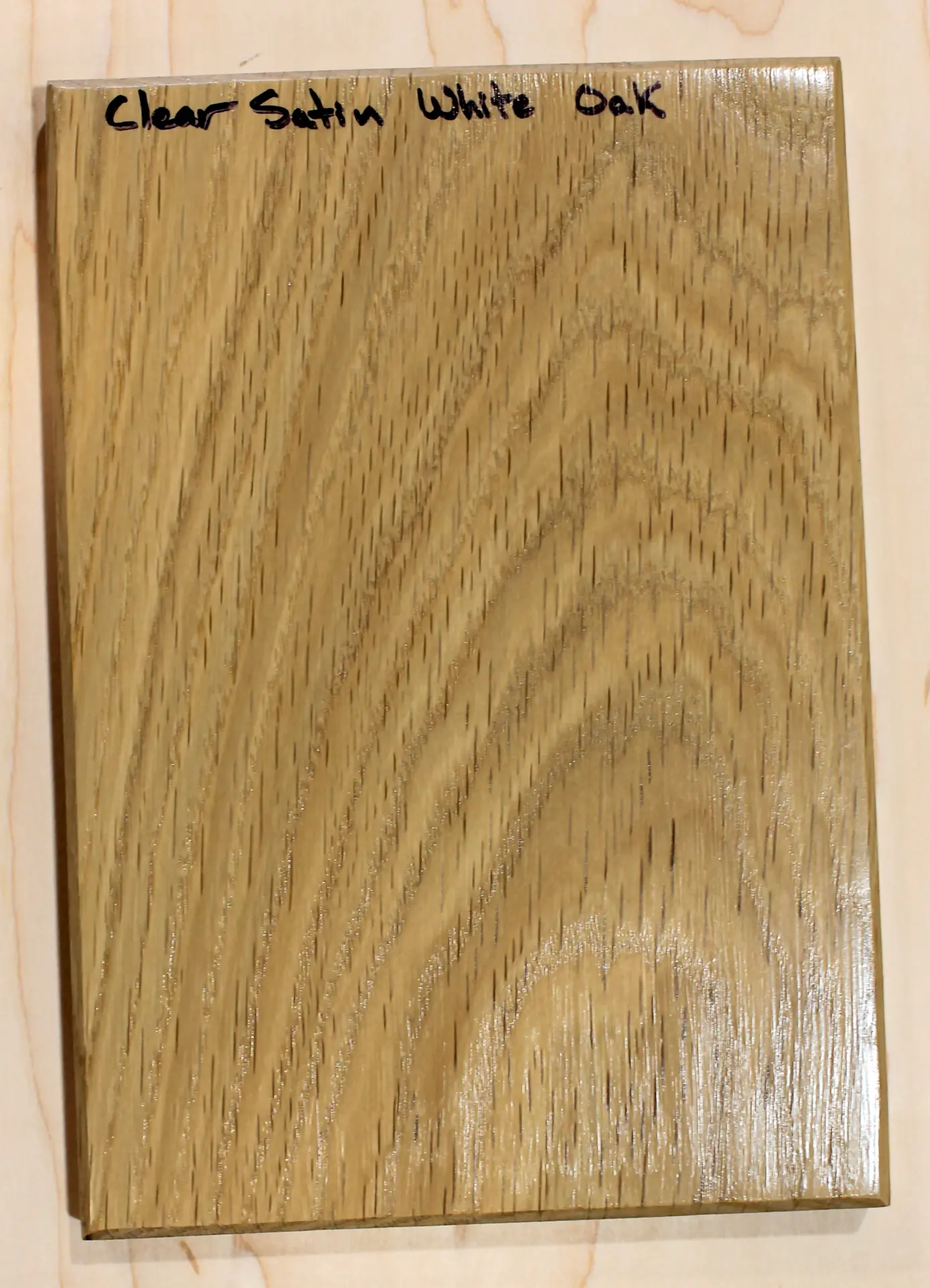
Clear SatinSpecies: White Oak 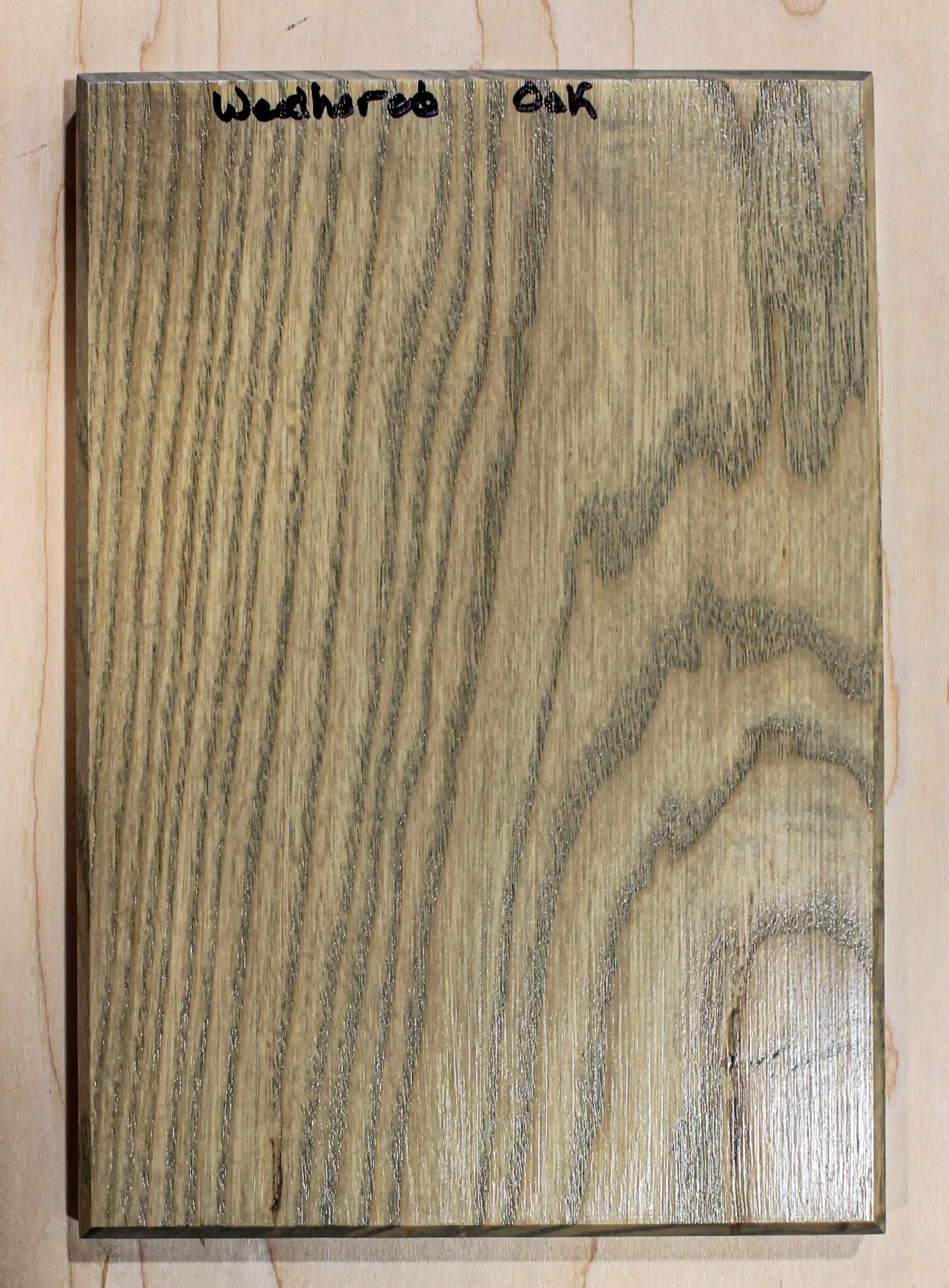
Weathered OakSpecies: Not documented 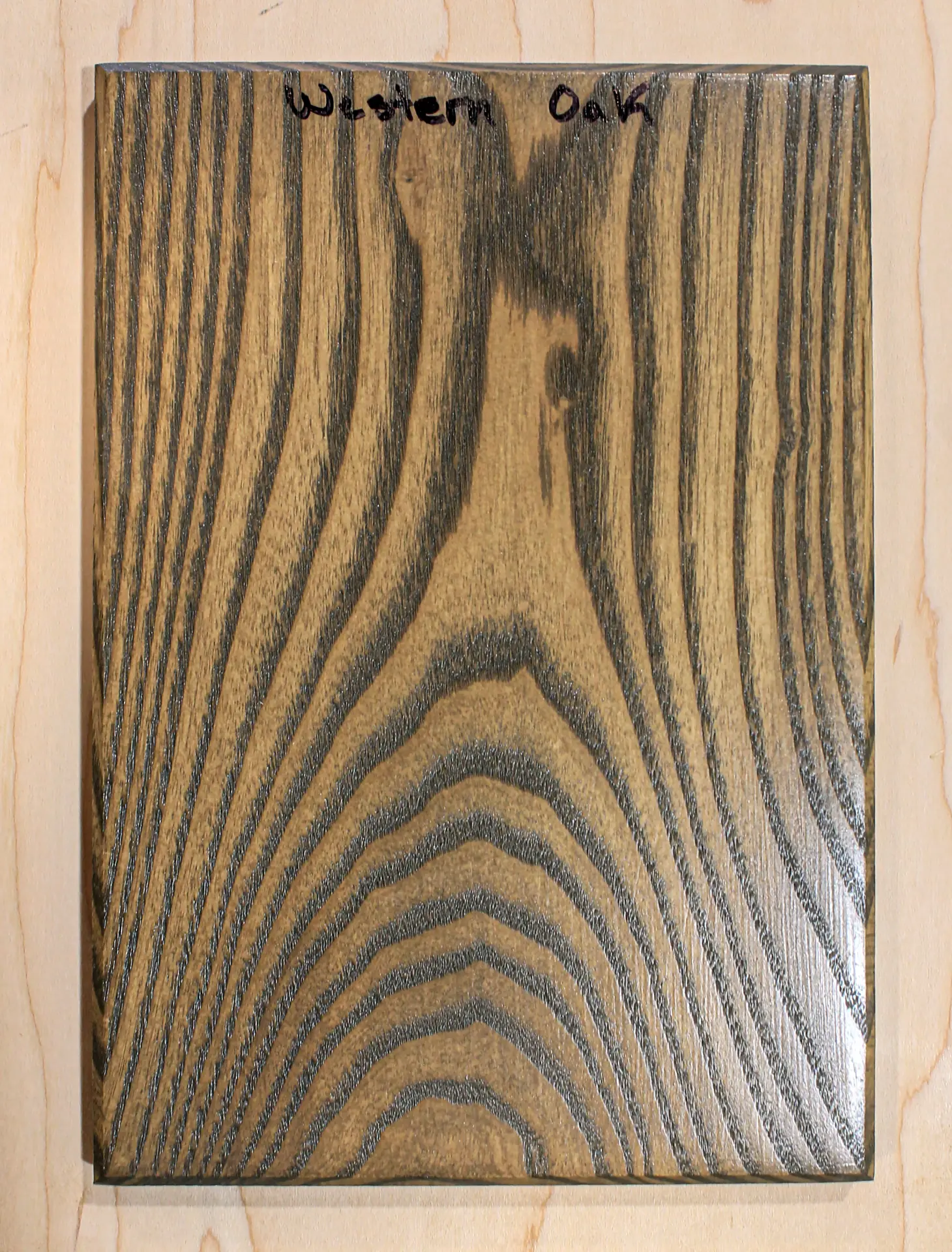
Western OakSpecies: Not documented 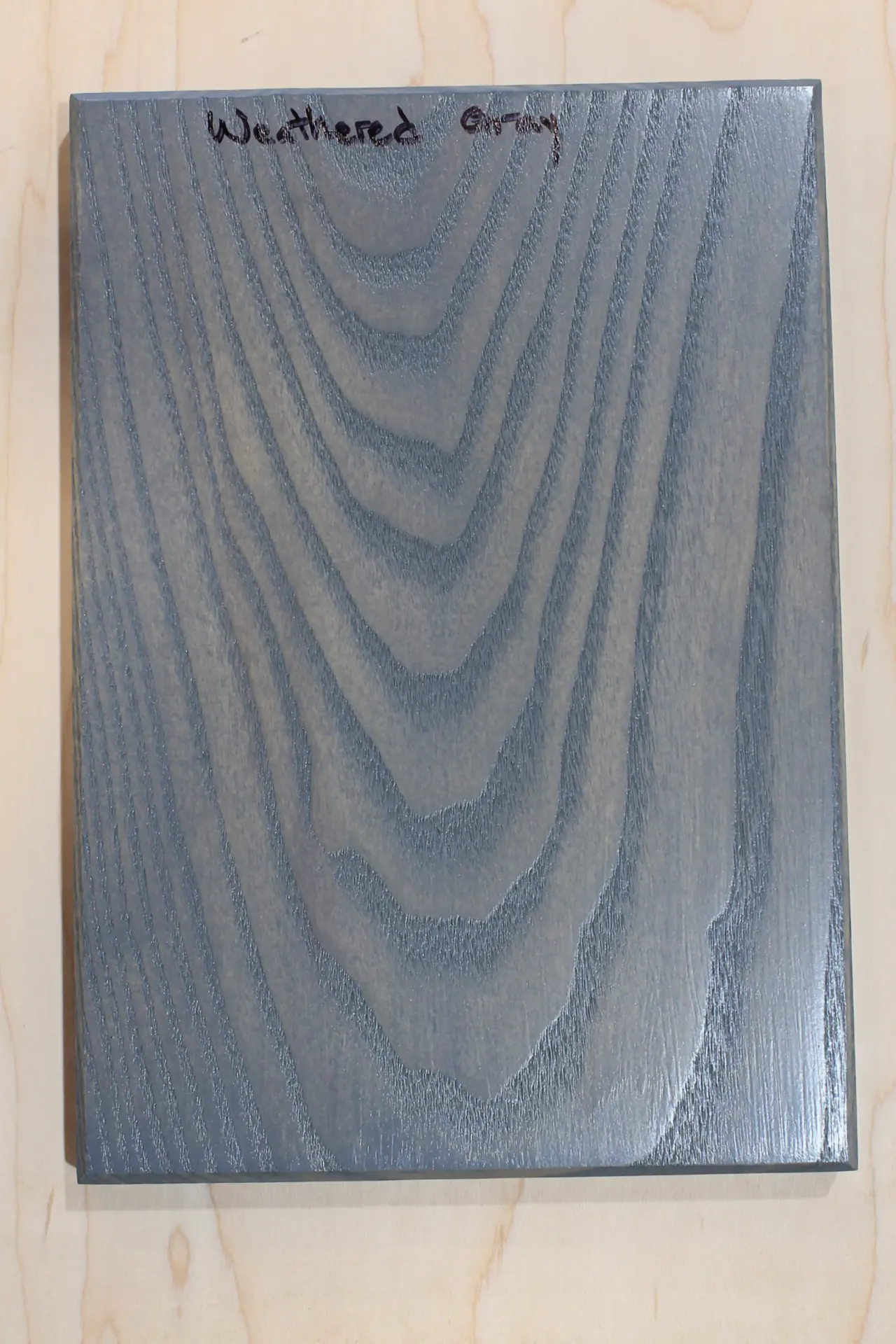
Weathered GraySpecies: Not documented 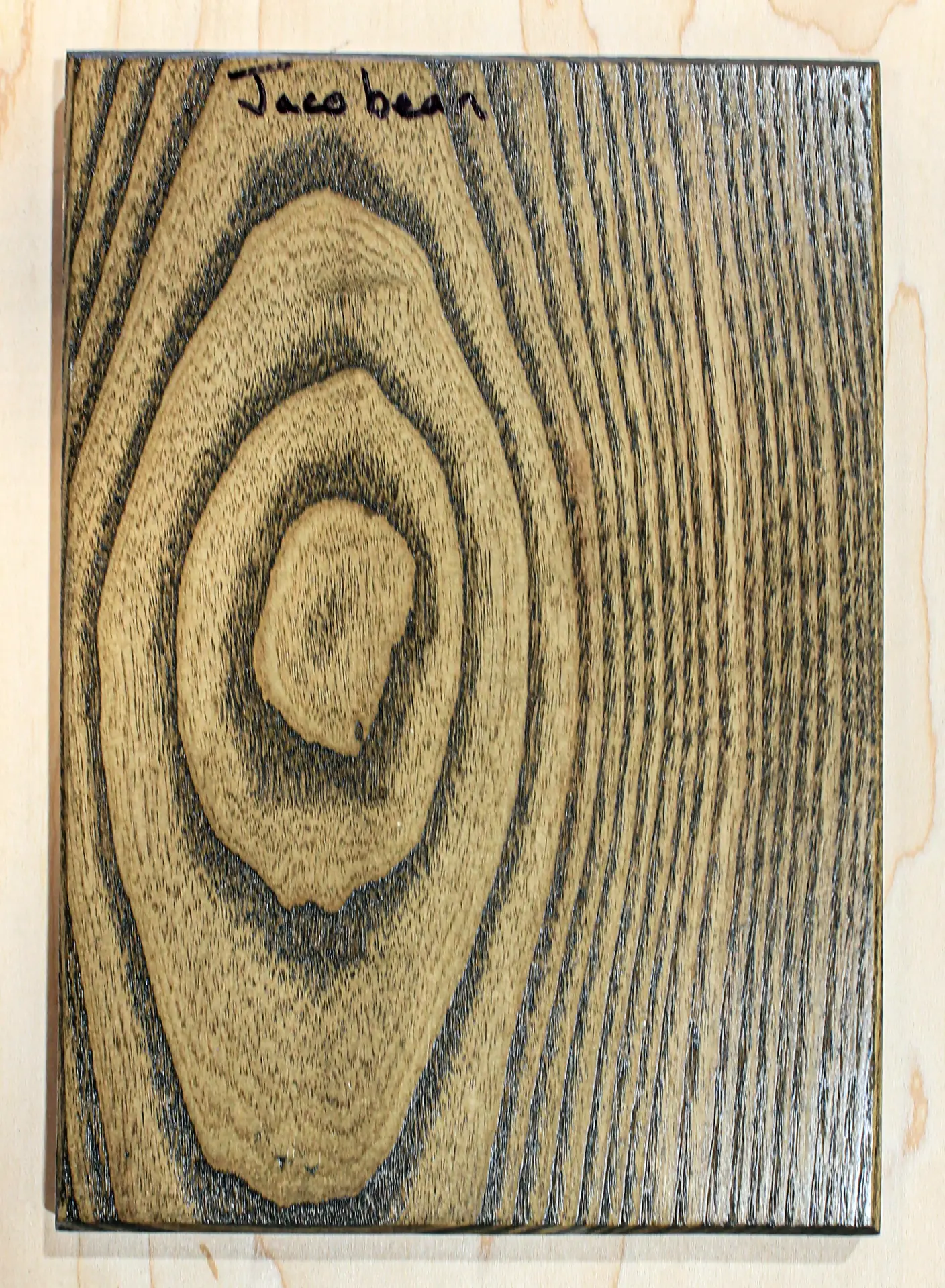
JacobeanSpecies: Not documented 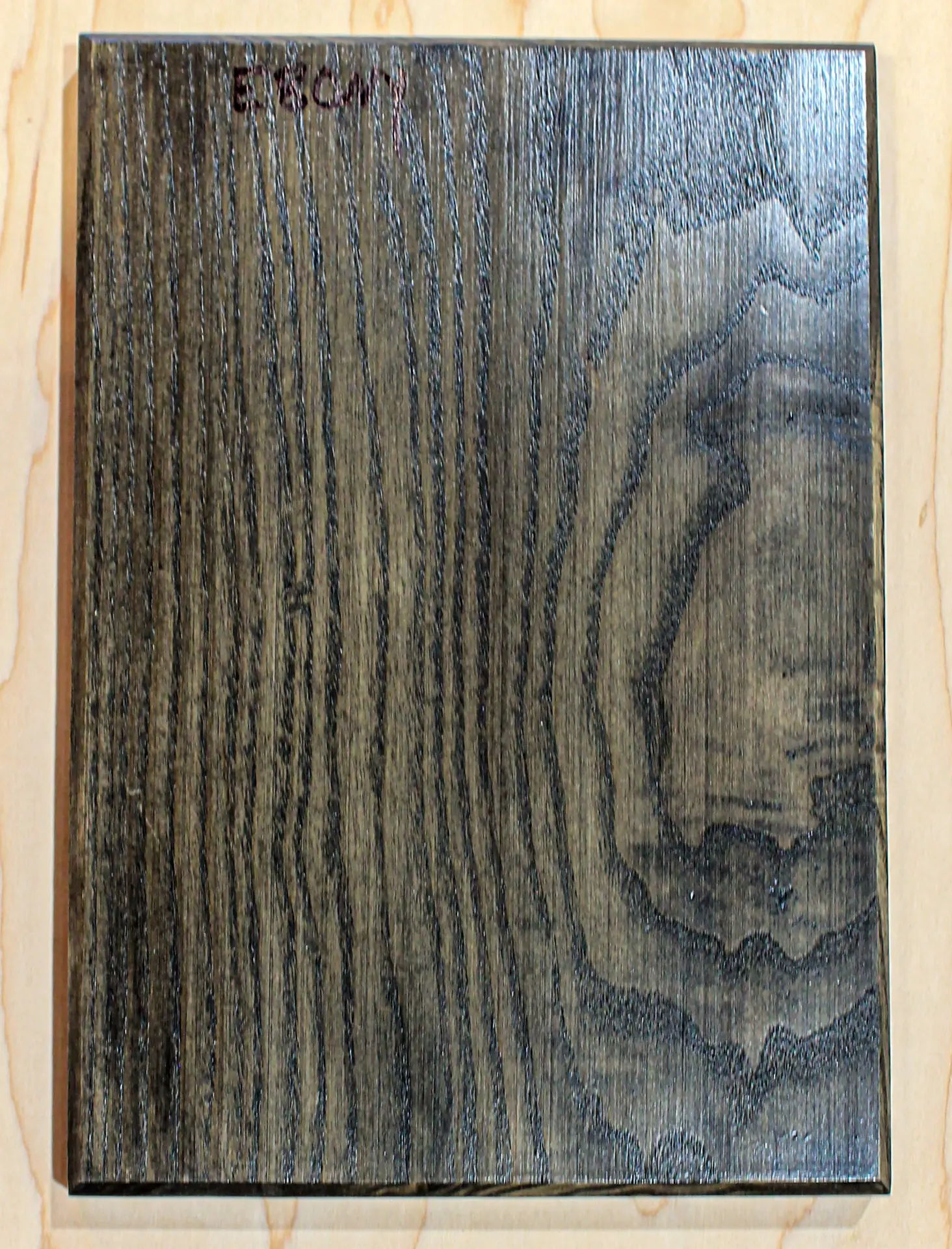
EbonySpecies: Not documented
These are shop samples photographed under shop lighting. We list a wood species only when the original sample board says so, and we don't guess it from the photo. The same finish reads differently on a different species, in different light, and at a different sheen, so a physical sample is always the deciding reference.
Design considerations
- Shelf depth and thickness are set by the intended load. A shelf meant to hold books needs a different spine and anchoring than one meant for lightweight decor.
- Without blocking behind the drywall, a steel spine can only anchor into the stud width available, which limits shelf length and load.
- Grain-matched runs are cut from the same board sequence so the pattern reads continuously.
- Concealed hardware means no visible brackets, but it also means the anchoring has to be right the first time.
Installation requirements
- Stud locations or existing blocking must be confirmed before fabrication so the spine is sized correctly.
- Wall surface should be finished before installation since the shelf is scribed to it.
- Where no blocking exists, added blocking behind drywall may be required before installation, which is scoped separately.
What moves the price
- Shelf length, thickness, and number of shelves in a run
- Wood species and grade
- Whether blocking already exists or needs to be added
- Finish type
From consult to installed.
- Step 1Field verification of stud locations
- Step 2Shelf and hardware sizing
- Step 3Shop fabrication
- Step 4Installation and field finishing
Send us the room type and room size, approximate wall dimensions, the number of walls, and ceiling height when it's relevant. Add the materials and finish you want, what the installation involves, the project location, and your desired timeframe.
We review the project scope, dimensions, materials, finishes, installation needs, and project complexity before quoting. Pricing is quoted per project from a written scope. Final pricing depends on project scope and size, materials, finishes, installation requirements, existing conditions, and project complexity.
Once you've approved the scope, materials, finishes, pricing, and installation requirements, you'll know what to expect before production begins. Existing construction, material availability, customer changes, and concealed conditions can still affect the final scope, pricing, or schedule, and we'll tell you if they do.
Recent heavy-duty floating shelves.
Heavy-Duty Floating Shelves questions
The wall's stud locations or existing blocking, not the shelf itself. Our shelves use a steel spine sized to the shelf length and intended load, anchored into framing confirmed during field verification.
That depends on the spine sizing, the shelf's span, and the anchoring behind the wall. Tell us what you intend to put on the shelf, books versus lightweight decor, and we size the hardware to that use before fabrication.
Without blocking, a steel spine can only anchor into the stud width available, which limits length and load. Where no blocking exists, adding blocking behind drywall may be required before installation, scoped separately.
Yes. A grain-matched run is cut from the same board sequence so the pattern reads continuously across multiple shelves.
Shelf length, thickness, and number of shelves in a run, wood species and grade, whether blocking already exists or needs to be added, and finish type.
Products we build for this
Heavy-Duty Floating Shelves in Phoenix, Flagstaff, and Tucson.
Start Your Quote
Tell us the room type, the room size, and the finish you're after. We'll review the scope and send back pricing written against it.